

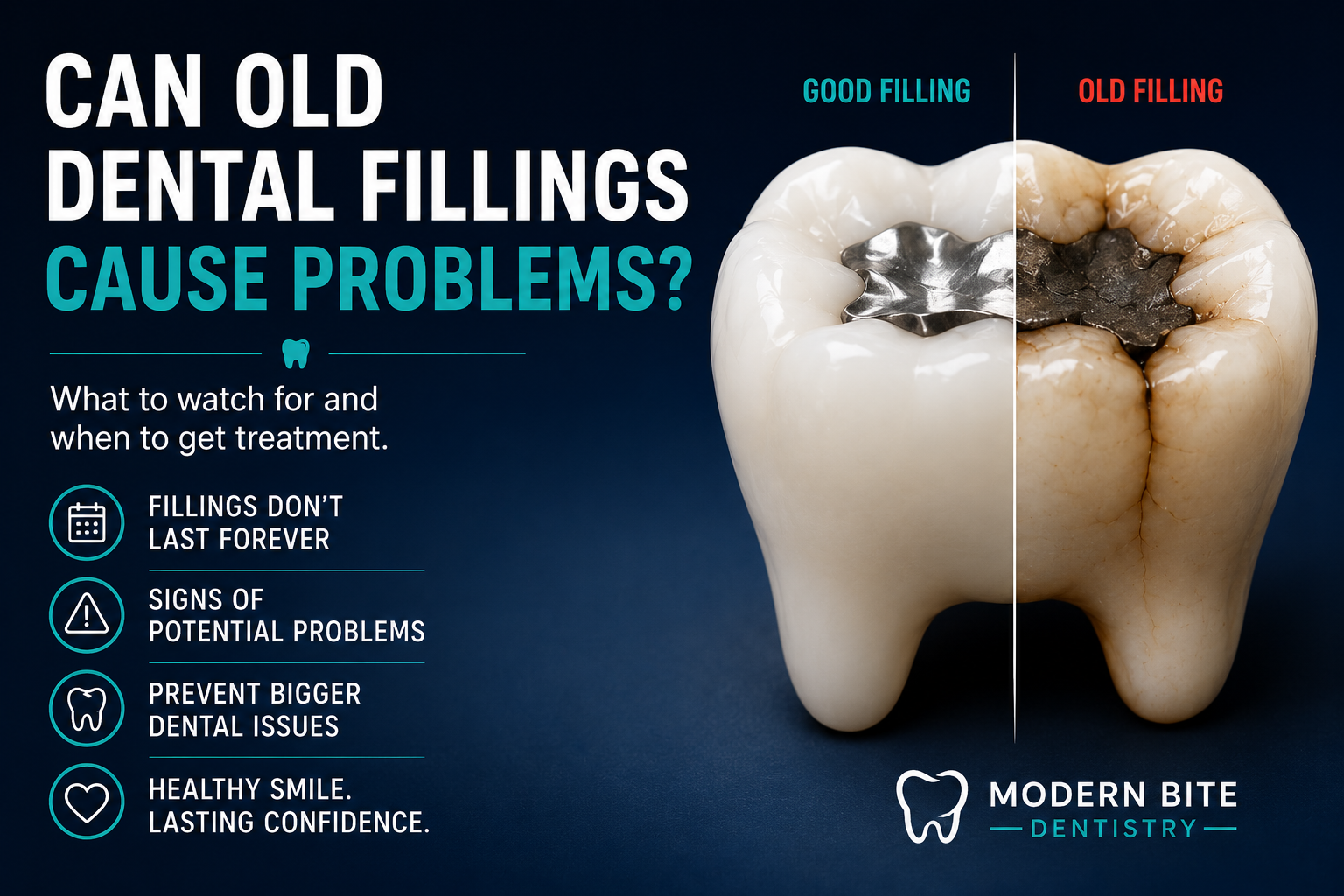
Old dental fillings are designed to restore teeth damaged by cavities, but they do not last forever. Over time, normal chewing forces, temperature changes, and everyday wear can weaken filling materials and affect how well they seal the tooth. As fillings age, they may crack, loosen, leak, or wear down, potentially allowing bacteria to enter the tooth again.
Many patients are unaware that older fillings can contribute to sensitivity, discomfort, or recurring decay years after the original treatment. In some cases, the symptoms develop gradually and may not become noticeable until the damage progresses. Understanding how aging fillings affect oral health can help patients recognize early warning signs and seek treatment before more extensive dental work becomes necessary.
Dental restorations experience continuous stress throughout daily use. Grinding, chewing hard foods, and changes in temperature can all affect the longevity of fillings. Patients who already experience enamel wear or structural tooth issues may face a greater risk of filling failure over time. Conditions related to enamel breakdown and long-term tooth wear are discussed further in tooth erosion prevention.
Routine dental evaluations play an important role in monitoring the condition of fillings before complications develop. Dentists can identify early signs of leakage, cracking, or recurrent decay during preventive visits and recommend treatment when necessary. The following sections explain the common problems associated with aging dental fillings, the symptoms patients should watch for, and the treatment options available to restore affected teeth.
Why Dental Fillings Can Wear Out Over Time
Dental fillings are exposed to constant pressure and environmental changes inside the mouth. Every day, teeth experience chewing forces, grinding, temperature fluctuations, and contact with acidic foods and beverages. Over time, these factors can gradually weaken restorative materials and reduce the effectiveness of the filling.
Although modern filling materials are durable, no restoration is permanent. The lifespan of a filling depends on several factors, including the material used, the size of the restoration, oral hygiene habits, and overall bite forces. As fillings age, the risk of cracking, leakage, or recurrent decay increases, which is why regular monitoring is important.
Daily Chewing Forces and Material Fatigue
Teeth experience significant mechanical stress during normal chewing. Fillings absorb much of this pressure, particularly in molars that handle stronger biting forces. Over time, repeated stress can cause small fractures or wear within the filling material.
Material fatigue develops gradually and may not cause symptoms immediately. However, tiny cracks can eventually allow bacteria and moisture to enter beneath the filling. Once this occurs, decay may begin forming under the restoration without being visible externally.
Large fillings are often more vulnerable to stress-related failure because less natural tooth structure remains to support the restoration. Patients who frequently chew hard foods or grind their teeth may experience faster deterioration of fillings over time.
Temperature Changes and Expansion
Fillings repeatedly expand and contract as they are exposed to hot and cold temperatures. Drinking coffee, eating cold foods, or sudden temperature changes create small movements within both the tooth and the filling material.
Over many years, this expansion and contraction can weaken the seal between the filling and the tooth. As microscopic gaps develop, bacteria may enter the space and contribute to recurrent decay beneath the restoration.
Some patients notice increased tooth sensitivity when temperature-related leakage develops around an aging filling. Sensitivity to cold or heat can sometimes indicate that the restoration is no longer sealing the tooth effectively.
Teeth Grinding and Bite Pressure
Patients who grind or clench their teeth place additional stress on fillings. Bruxism can accelerate wear and increase the likelihood of fractures in both the restoration and surrounding tooth structure.
Excessive bite pressure may also loosen older fillings over time. When restorations shift slightly, bacteria can enter underneath the material and weaken the tooth from within. Patients with grinding-related wear patterns often require protective appliances to reduce stress on restorations.
Long-term grinding can affect overall tooth stability as well as existing restorations. Preventive strategies used to protect teeth from excessive pressure are also discussed in night guard treatment.
Aging Dental Materials
Different filling materials age differently depending on their composition and placement within the mouth. Composite resin fillings may gradually wear down or stain, while older metal fillings can expand slightly as they age.
As restorations deteriorate, they may become less effective at protecting the tooth. Margins can weaken, surfaces may roughen, and microscopic leakage can develop. Even when the filling itself remains intact, the surrounding tooth structure can still become compromised.
Understanding how fillings age helps explain why routine dental evaluations remain important years after the original restoration was placed.
Signs an Old Filling May Be Causing Problems
Problems with aging fillings often develop gradually. Some patients experience noticeable symptoms such as pain or sensitivity, while others may not realize a filling is failing until a dentist identifies damage during an examination. Recognizing early warning signs can help prevent larger restorations or more extensive treatment later.
A failing filling does not always mean the entire restoration has broken. Small gaps, hidden decay, or weakened tooth structure around the filling can still create significant problems over time. Paying attention to changes in comfort, appearance, or chewing function helps patients identify when professional evaluation may be necessary.
Increased Tooth Sensitivity
One of the most common signs of an aging filling is increased sensitivity to hot, cold, or sweet foods. This sensitivity may develop when the seal around the filling begins to weaken, allowing external stimuli to reach the inner layers of the tooth.
Sensitivity may initially occur only occasionally but can become more persistent over time. Patients sometimes notice discomfort when drinking cold beverages or eating foods with high sugar content. In some cases, pressure sensitivity while chewing may also develop.
These symptoms may indicate that the filling no longer protects the tooth effectively. Early evaluation helps determine whether the restoration can be repaired or if replacement is necessary.
Cracks, Chips, or Rough Edges
As fillings wear down, visible damage may begin to appear. Small cracks, chipped areas, or rough surfaces can develop due to years of chewing pressure or grinding.
Damaged filling surfaces may trap plaque and food particles more easily, increasing the risk of recurrent decay around the restoration. Rough edges can also irritate the tongue or cheeks during speaking and chewing.
Patients who notice changes in the texture or shape of a filling should have the area evaluated promptly. Even small fractures can expand over time and weaken the surrounding tooth structure.
Recurring Decay Around the Filling
Decay can sometimes develop beneath or around older fillings without obvious symptoms. When bacteria enter microscopic gaps between the filling and tooth, they may begin damaging the tooth structure underneath the restoration.
Recurrent decay is especially concerning because it can remain hidden until significant damage has occurred. Dentists often identify these problems through examinations and dental imaging during routine visits.
If untreated, decay beneath a filling may progress deeper into the tooth and eventually require more extensive restorative treatment. Understanding how restorative procedures address tooth damage is discussed further in restorative dental services.
Persistent Pain or Pressure
Ongoing discomfort around a filled tooth can indicate deeper structural problems. Pain while chewing, lingering sensitivity, or pressure sensations may suggest that the filling has loosened or that the tooth underneath has become compromised.
In some situations, bacterial leakage beneath an old filling can irritate the inner pulp tissue of the tooth. This inflammation may eventually lead to infection or nerve-related pain if left untreated.
Patients experiencing persistent discomfort should seek professional evaluation before the condition worsens. Symptoms involving deeper pulp irritation may resemble issues described in root canal warning signs.
What Dentists Look for During a Filling Evaluation
When evaluating older fillings, dentists assess both the restoration itself and the surrounding tooth structure. Even fillings that appear stable externally may develop hidden problems underneath the surface. A comprehensive examination helps identify early signs of leakage, decay, fractures, or structural weakening before more serious complications occur.
Routine evaluations are important because many filling-related issues develop gradually and may not cause symptoms immediately. Detecting problems early often allows for simpler treatment and helps preserve more natural tooth structure.
Visual Examination of the Restoration
Dentists begin by inspecting the filling for visible signs of wear or damage. Cracks, rough margins, discoloration, or small gaps around the edges can indicate that the restoration is beginning to fail.
The surrounding tooth structure is also evaluated carefully. Areas where the tooth and filling no longer fit tightly together may allow bacteria to enter beneath the restoration. Changes in color around the edges of the filling can sometimes suggest hidden decay.
Visual examinations help dentists determine whether the restoration remains stable or if additional diagnostic testing is necessary.
Dental X-Rays and Hidden Decay Detection
Dental imaging is often used to evaluate older fillings more thoroughly. X-rays help dentists identify decay that may be developing beneath the filling or between teeth where direct visualization is difficult.
Hidden recurrent decay is one of the most common reasons older fillings require replacement. Because the damage occurs underneath the restoration, patients may not notice symptoms until the decay becomes extensive.
Routine imaging during preventive care visits helps dentists detect these issues earlier. Preventive monitoring through dental cleanings exams plays an important role in identifying filling problems before they progress.
Bite and Pressure Assessment
Dentists also evaluate how the filling interacts with the patient’s bite. Uneven pressure or changes in tooth alignment can place excessive stress on restorations and contribute to fractures or discomfort.
Patients who grind their teeth may show signs of accelerated wear around fillings. Bite-related issues can weaken restorations gradually and increase the risk of cracking in both the filling and surrounding tooth structure.
Assessing bite function helps dentists determine whether additional protective measures are necessary to preserve existing restorations.
Evaluating the Remaining Tooth Structure
A filling can only function effectively if enough healthy tooth structure remains to support it. During evaluations, dentists assess whether the surrounding enamel and dentin remain stable or if the tooth has become structurally compromised.
Large or aging fillings sometimes weaken the remaining tooth over time. If significant structural loss has occurred, replacing the filling alone may no longer provide sufficient protection. In these situations, additional restorative treatment may be recommended to reinforce the tooth.
Careful evaluation of both the filling and the tooth helps determine the safest long-term treatment approach.
Treatment Options for Problematic Dental Fillings
Treatment for an aging or failing filling depends on the extent of the damage and the condition of the surrounding tooth. Some restorations can be repaired or replaced conservatively, while others require more extensive treatment to restore strength and function.
The goal of treatment is to eliminate decay or structural instability while preserving as much healthy tooth structure as possible. Early intervention often allows for simpler restorative procedures and helps reduce the risk of complications affecting the inner tooth.
Replacing an Old Filling
When a filling shows signs of leakage, cracking, or wear, replacement is often the most appropriate treatment. During the procedure, the dentist removes the old restoration and any damaged tooth material before placing a new filling.
Modern composite materials are commonly used because they bond directly to the tooth and provide a natural appearance. Replacing deteriorated fillings helps restore the protective seal around the tooth and reduces the risk of recurrent decay.
Timely replacement also prevents small problems from progressing into larger structural issues that require more complex treatment later.
Dental Crowns for Weakened Teeth
Some teeth with large or aging fillings become too weak to support another filling safely. When significant tooth structure has been lost, dentists may recommend a crown to reinforce and protect the tooth.
Crowns cover the entire visible portion of the tooth, distributing chewing forces more evenly and reducing the risk of fractures. This approach is commonly used when repeated fillings or extensive decay have weakened the remaining structure.
Patients with structurally compromised teeth may require long-term reinforcement through dental crowns, which help restore durability and function.
Treating Infection Beneath a Filling
If bacteria have reached the inner pulp of the tooth, additional treatment may be necessary before the tooth can be restored. Infections beneath fillings can cause persistent pain, swelling, or deep sensitivity.
Treatment depends on how far the infection has progressed. In some cases, the damaged tissue inside the tooth must be removed before a restoration can be placed. Early intervention improves the likelihood of preserving the tooth and avoiding extraction.
Prompt treatment is especially important when symptoms suggest deeper nerve involvement or active infection.
Preventing Future Filling Problems
Maintaining good oral hygiene and regular dental care helps extend the lifespan of fillings and reduce future complications. Brushing, flossing, and minimizing excessive sugar exposure all support the long-term stability of restorations.
Patients who grind their teeth or place heavy pressure on restorations may also benefit from protective appliances. Preventive care allows dentists to monitor fillings regularly and address small issues before they become larger structural problems.
Long-term filling success depends on both the quality of the restoration and consistent preventive maintenance.
When to Contact Modern Bite Dentistry
Changes involving old fillings should not be ignored, especially when symptoms such as pain, sensitivity, or pressure begin to develop. Early professional evaluation helps identify whether the filling remains stable or if the tooth underneath has become compromised. Addressing these issues promptly often prevents more extensive restorative treatment later.
Routine dental care is one of the most effective ways to monitor aging restorations and detect hidden problems before they worsen. Dentists can evaluate the condition of fillings, identify early signs of recurrent decay, and recommend appropriate treatment to preserve tooth structure and oral health.
Scheduling a Dental Evaluation
Patients experiencing symptoms around older fillings should schedule a professional examination as soon as possible. Even minor discomfort can indicate structural changes or bacterial leakage beneath the restoration.
During the evaluation, dentists assess the filling, surrounding tooth structure, and overall bite function to determine whether treatment is necessary. Early diagnosis often allows for more conservative treatment options and better long-term outcomes.
Patients can request an appointment or learn more about available services through the practice’s contact page.
Restoring Tooth Strength and Comfort
Treatment recommendations depend on the severity of the problem and the condition of the remaining tooth. Some patients may only require filling replacement, while others benefit from additional reinforcement to protect weakened teeth.
Modern restorative treatments are designed to restore both function and comfort while preserving natural tooth structure whenever possible. Addressing failing fillings early helps reduce the risk of fractures, infection, and more complex procedures later.
Patients who maintain consistent preventive care and seek prompt evaluation when symptoms arise are more likely to preserve long-term oral health and avoid avoidable complications.
Key Takeaways About Aging Dental Fillings
Old dental fillings can develop problems over time as a result of wear, pressure, temperature changes, and gradual material deterioration. While fillings are durable, they are not permanent restorations. Cracks, leakage, recurrent decay, and structural weakening can all occur as fillings age.
Recognizing early symptoms such as sensitivity, pain, rough edges, or pressure while chewing allows patients to seek treatment before the damage progresses. Routine dental evaluations play an essential role in identifying hidden issues and maintaining the long-term stability of restorations.
Treatment options vary depending on the condition of the filling and surrounding tooth structure. Replacing worn fillings, reinforcing weakened teeth, and addressing infections early help preserve oral health and reduce the need for more extensive procedures.
Patients concerned about older fillings or changing symptoms should schedule a professional evaluation promptly. Early care supports better treatment outcomes and helps maintain strong, healthy teeth over time.