

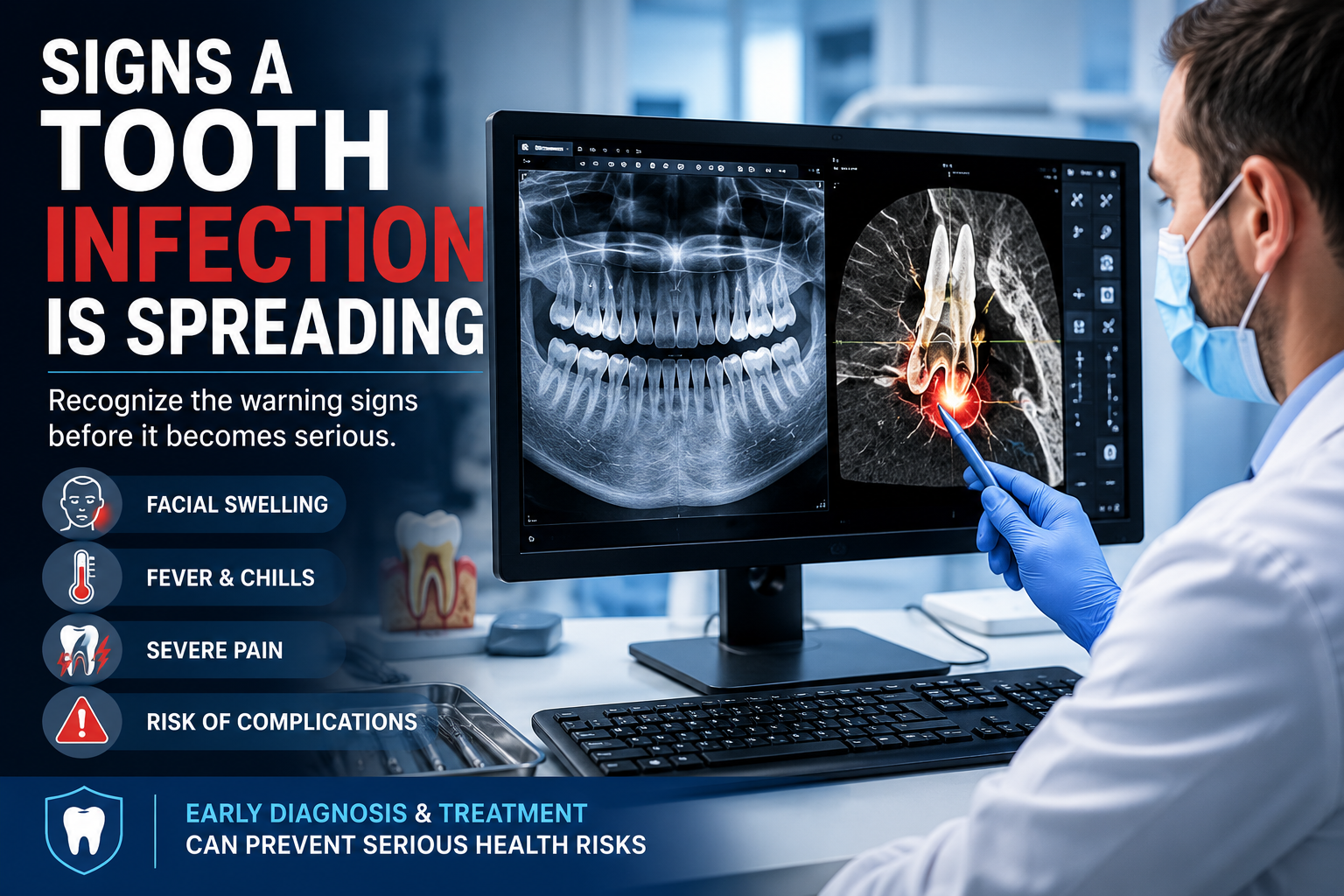
A tooth infection occurs when bacteria enter the inner structures of a tooth and begin to multiply within the pulp or surrounding tissues. Infections often develop as a result of untreated cavities, cracks, gum disease, or dental trauma. While some infections initially remain localized, bacteria can spread beyond the tooth if treatment is delayed. Recognizing the warning signs of a spreading infection is important because untreated dental infections may lead to serious oral and systemic complications.
In the early stages, symptoms may include localized tooth pain, sensitivity, or swelling near the affected area. As the infection progresses, additional symptoms can appear that indicate the bacteria are moving into surrounding tissues. Increased swelling, persistent throbbing pain, fever, or difficulty swallowing may signal that the condition is becoming more severe and requires prompt dental evaluation.
Timely diagnosis and treatment play a key role in preventing complications associated with spreading tooth infections. Professional evaluation allows dentists to identify the source of infection and determine the most appropriate treatment plan. Educational resources such as common signs you need a root canal often explain how untreated infections inside the tooth can progress and affect surrounding structures.
Ignoring symptoms of infection can increase the risk of abscess formation, bone involvement, and spread of bacteria into nearby tissues. Understanding how dental infections progress and recognizing when symptoms indicate worsening infection can help individuals seek care before more extensive treatment becomes necessary.
What Causes a Tooth Infection to Spread?
A tooth infection typically begins when bacteria penetrate the enamel and dentin layers of a tooth and reach the pulp chamber. The pulp contains nerves, blood vessels, and connective tissue that support the tooth during development. Once bacteria enter this area, inflammation and infection can develop rapidly because the enclosed environment limits the body’s ability to clear the infection naturally.
As pressure builds within the infected tooth, bacteria may begin spreading beyond the root into surrounding tissues. Without treatment, the infection can move into the gums, jawbone, and nearby soft tissues. The progression of infection often depends on factors such as immune response, severity of bacterial invasion, and how long the infection remains untreated.
Untreated Cavities and Tooth Damage
One of the most common causes of spreading tooth infection is untreated tooth decay. Cavities create openings in the enamel that allow bacteria to move deeper into the tooth structure. Over time, the infection may reach the pulp and trigger severe inflammation or abscess formation.
Structural damage such as fractures or worn enamel can also provide pathways for bacteria to enter the tooth. Cracks may expose deeper layers of the tooth and allow infection to develop even in the absence of visible decay. Conditions associated with structural damage are discussed in resources such as can worn down teeth be repaired, which explains how compromised tooth structure increases the risk of internal damage and infection.
Gum Disease and Bacterial Spread
Advanced gum disease can contribute to tooth infection by creating deep periodontal pockets around the teeth. These pockets trap bacteria and allow infection to spread beneath the gumline. As bacteria multiply, inflammation may extend into the surrounding connective tissue and bone.
Periodontal infections can sometimes occur simultaneously with infections inside the tooth, increasing the severity of symptoms and complicating treatment. Maintaining healthy gums and controlling plaque accumulation are important factors in reducing the likelihood of bacterial spread.
Delayed Dental Treatment
Delaying professional treatment allows bacteria additional time to multiply and invade nearby tissues. Some individuals postpone care because symptoms temporarily improve or fluctuate in intensity. However, temporary reduction in pain does not mean the infection has resolved.
Without treatment, infections can continue spreading beneath the surface even when symptoms appear less severe. Prompt evaluation allows dentists to identify the extent of infection and begin treatment before complications become more difficult to manage.
Weakened Immune Response
Certain medical conditions and lifestyle factors can impair the body’s ability to contain bacterial infections. Diabetes, smoking, chronic stress, and immune system disorders may increase susceptibility to severe dental infections and accelerate the spread of bacteria into surrounding tissues.
Individuals with weakened immune responses may experience faster progression of symptoms and increased risk of complications. Early intervention becomes especially important in these situations to reduce the likelihood of widespread infection.
Common Signs a Tooth Infection Is Spreading
As a dental infection progresses beyond the tooth itself, symptoms often become more noticeable and severe. While localized tooth pain may be the first sign of infection, spreading bacteria can affect nearby tissues and trigger systemic symptoms. Recognizing these warning signs helps identify when immediate professional evaluation may be necessary.
The severity and combination of symptoms vary depending on the location of the infection and how far it has progressed. Some signs indicate localized inflammation, while others suggest the infection may be affecting deeper tissues or entering the bloodstream.
Increasing Swelling in the Face or Gums
Swelling is one of the most common signs that a tooth infection is spreading. In the early stages, swelling may remain limited to the gum tissue surrounding the affected tooth. As the infection advances, swelling can extend into the cheeks, jaw, or surrounding facial structures.
Facial swelling often indicates that bacteria have spread beyond the tooth root into nearby soft tissues. In severe cases, swelling may interfere with normal mouth movement or create visible facial asymmetry. Prompt evaluation is important because untreated swelling can progress rapidly and increase the risk of additional complications.
Persistent or Throbbing Pain
Pain associated with a tooth infection often becomes more intense as the infection spreads. Many individuals experience throbbing pain that worsens when lying down or chewing. The discomfort may radiate into the jaw, ear, or surrounding teeth as inflammation affects nearby nerves and tissues.
Pain that becomes persistent or increasingly severe may indicate abscess formation or pressure buildup within the infected area. Dental emergencies involving severe pain are often evaluated through services such as emergency dental care, which help identify the source of infection and determine appropriate treatment.
Fever and General Illness Symptoms
When a dental infection begins affecting the body systemically, symptoms such as fever, fatigue, or swollen lymph nodes may develop. Fever indicates that the immune system is responding to bacterial spread and attempting to control the infection.
General illness symptoms may also include chills, weakness, or a feeling of malaise. These symptoms suggest that the infection may be progressing beyond the localized area of the tooth and require immediate professional attention.
Difficulty Swallowing or Breathing
Difficulty swallowing or breathing is considered a serious warning sign of advanced infection. Significant swelling in the mouth, jaw, or throat can obstruct normal airway function and create medical emergencies that require urgent treatment.
These symptoms should never be ignored because they may indicate that the infection has spread into deeper facial or neck tissues. Immediate evaluation is necessary to reduce the risk of severe complications and protect overall health.
Potential Complications of a Spreading Tooth Infection
Untreated dental infections can lead to serious complications that extend beyond the mouth and surrounding tissues. While some infections remain localized for a period of time, bacterial spread increases the risk of damage to bone, soft tissues, and systemic health. The severity of complications depends on factors such as the location of the infection, immune response, and how long treatment is delayed.
Early intervention significantly reduces the likelihood of complications developing. Once bacteria spread into deeper tissues, treatment may become more complex and require additional procedures to control the infection and restore oral health.
Dental Abscess Formation
One of the most common complications of spreading infection is the development of a dental abscess. An abscess is a pocket of pus that forms when the body attempts to isolate bacterial infection. Abscesses may develop near the root of the tooth or within surrounding gum tissue.
Symptoms of an abscess often include severe pain, swelling, and sensitivity to pressure. In some cases, a foul taste or drainage may occur if the abscess ruptures. Although drainage may temporarily reduce pressure, the underlying infection remains and still requires professional treatment.
Bone and Tissue Damage
As infection progresses, bacteria can damage the bone and connective tissues surrounding the tooth. Prolonged inflammation may weaken the jawbone and compromise the structural support of nearby teeth.
Bone involvement increases the risk of tooth mobility and tooth loss. In advanced cases, significant tissue destruction may require more extensive restorative or surgical treatment to rebuild affected areas and restore oral function.
Spread Into Nearby Facial Structures
Severe dental infections can spread into surrounding facial spaces and soft tissues. This may result in widespread swelling, pain, and difficulty with speaking, chewing, or swallowing. Infections involving facial tissues often progress more rapidly and may require urgent treatment to prevent further spread.
Advanced infections may also involve the sinuses or deeper spaces within the jaw and neck. These complications increase treatment complexity and can affect overall health if not addressed promptly.
Systemic Health Risks
In rare but serious situations, bacteria from a dental infection can enter the bloodstream and affect other parts of the body. Systemic spread may increase the risk of widespread infection and additional medical complications.
This possibility highlights the importance of early diagnosis and prompt dental treatment. Managing infections before they spread significantly reduces the risk of systemic involvement and helps preserve both oral and overall health.
How Dentists Treat Spreading Tooth Infections
Treatment for a spreading tooth infection focuses on eliminating bacteria, controlling inflammation, and preserving as much healthy tooth structure as possible. The specific treatment approach depends on the severity of infection, the location of the affected tooth, and whether surrounding tissues have become involved.
Prompt intervention often improves treatment outcomes and reduces the likelihood of serious complications. Dentists evaluate symptoms, examine the affected area, and use imaging to determine how far the infection has spread before recommending treatment.
Draining the Infection
In some cases, reducing pressure and draining accumulated infection is necessary to relieve pain and limit bacterial spread. Drainage may be performed through the affected tooth or surrounding tissue depending on the location of the abscess.
This process helps remove pus and decrease inflammation within the infected area. Although drainage can improve symptoms, additional treatment is usually required to eliminate the source of infection and prevent recurrence.
Root Canal Treatment
When infection is confined primarily to the pulp chamber and root canals, root canal therapy may be recommended to preserve the natural tooth. This procedure involves removing infected tissue, disinfecting the internal canals, and sealing the tooth to prevent reinfection.
Root canal treatment allows many infected teeth to remain functional while eliminating the bacterial source. Early intervention often improves the likelihood that the tooth can be successfully restored.
Tooth Extraction in Severe Cases
If the infection has caused extensive structural damage or the tooth cannot be preserved, extraction may be necessary. Removing the infected tooth prevents bacteria from continuing to spread into surrounding tissues.
Dentists evaluate whether the remaining tooth structure is stable enough for restoration before recommending extraction. Preserving the natural tooth is generally preferred whenever possible, but severe infections may limit available treatment options.
Antibiotics and Follow-Up Care
Antibiotics may be prescribed when infection has spread beyond the tooth into surrounding tissues or when swelling is significant. Antibiotic therapy helps reduce bacterial levels and supports the body’s immune response during treatment.
Follow-up care is important to ensure the infection has resolved completely and that healing progresses normally. Ongoing preventive care and monitoring help reduce the likelihood of future infections developing.
When to Seek Emergency Dental Care
Certain symptoms associated with tooth infection require immediate professional attention because they may indicate rapid bacterial spread or involvement of deeper tissues. Delaying care in these situations increases the risk of severe complications and may lead to more extensive treatment needs.
Recognizing emergency symptoms allows individuals to seek prompt care before the infection progresses further. Dental professionals can evaluate the severity of the condition and begin treatment designed to control infection and relieve symptoms.
Severe Swelling or Facial Asymmetry
Rapid swelling involving the face, jaw, or gums should be evaluated immediately. Significant swelling often indicates that the infection has spread into surrounding tissues and may continue progressing quickly without treatment.
Swelling that affects facial appearance or limits mouth movement may require urgent dental intervention to reduce pressure and control bacterial spread.
Persistent Fever or Chills
Fever accompanied by chills or general illness symptoms may suggest that the infection is affecting the body systemically. These symptoms indicate a stronger immune response and should not be ignored.
Prompt evaluation helps determine whether the infection remains localized or requires more advanced management to prevent additional complications.
Trouble Swallowing or Breathing
Difficulty swallowing or breathing represents a medical emergency because swelling may obstruct the airway. Immediate treatment is necessary to protect normal breathing function and prevent life-threatening complications.
Individuals experiencing these symptoms should seek emergency care without delay.
Company Call to Action
If you are experiencing symptoms such as swelling, severe tooth pain, fever, or difficulty swallowing, prompt dental evaluation is important to prevent the infection from worsening. Early treatment helps control bacterial spread and reduces the risk of complications affecting surrounding tissues and overall health.
Modern Bite Dentistry provides comprehensive diagnostic and emergency dental services for patients experiencing tooth infections and dental pain. Individuals concerned about a possible spreading infection can schedule an evaluation through the clinic’s contact page to receive professional care and treatment recommendations.