

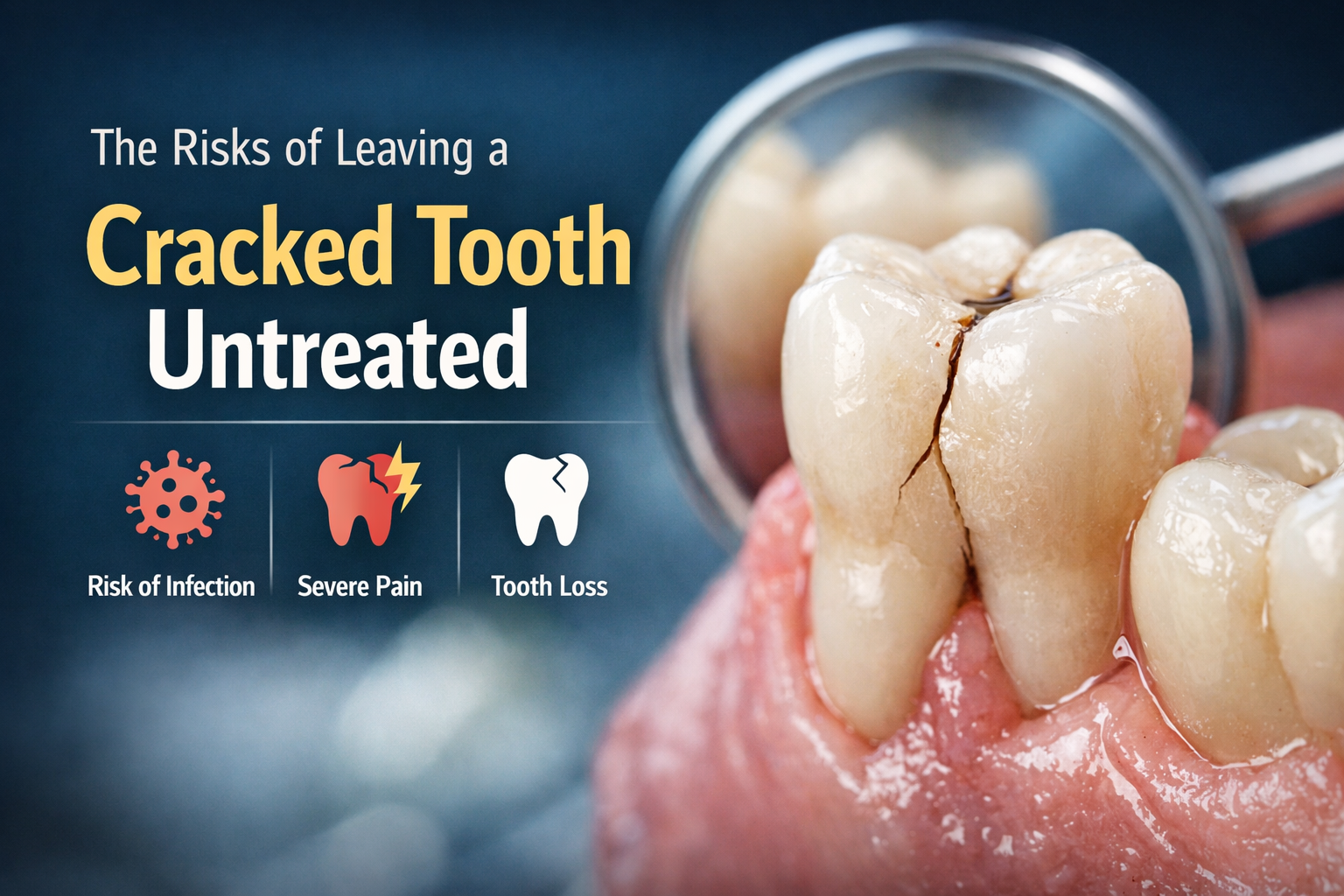
A cracked tooth is a common dental problem that can range from a minor surface fracture to a deeper structural break that affects the inner layers of the tooth. Small cracks may initially produce mild symptoms or none at all, which often leads people to delay treatment. However, even a small fracture weakens the tooth’s protective enamel and can allow bacteria and pressure from chewing to worsen the damage over time.
When a crack is left untreated, it may extend into the dentin and eventually reach the pulp where nerves and blood vessels are located. As the crack deepens, symptoms such as sharp pain when biting, temperature sensitivity, or persistent discomfort may begin to appear. In more advanced cases, infection can develop within the tooth, potentially requiring restorative procedures such as dental crowns or other treatments designed to stabilize and protect the tooth structure.
Routine dental visits often play a key role in identifying cracks before they progress. During preventive examinations and professional dental cleanings exams, dentists can detect early structural damage that may not yet be visible or causing symptoms. Early detection allows minor fractures to be treated before they develop into more serious complications that threaten the long-term health of the tooth.
Ignoring a cracked tooth can lead to more complex dental problems, including infection, structural fracture, or tooth loss. In situations where pain or swelling suddenly develops, prompt evaluation may be necessary to prevent the condition from worsening. Seeking timely care through services such as emergency dental care can help diagnose the severity of the crack and determine the most appropriate treatment plan.
What Happens When a Cracked Tooth Is Left Untreated
A cracked tooth often begins as a small structural defect in the enamel, the hard outer layer that protects the inner parts of the tooth. While enamel is one of the strongest substances in the human body, it cannot regenerate once damaged. When a crack forms, the tooth becomes more vulnerable to stress from chewing forces, temperature changes, and bacterial penetration. Without treatment, these factors can gradually cause the fracture to extend deeper into the tooth structure.
As the crack progresses, it may reach the dentin layer beneath the enamel. Dentin is softer and contains microscopic channels that communicate with the pulp, where the tooth’s nerves and blood supply are located. Once bacteria enter through the fracture, inflammation and infection may develop within the pulp chamber. Early detection during routine visits such as dental cleanings exams can help identify small cracks before they extend into deeper layers of the tooth.
How Cracks Progress Inside the Tooth
Cracks rarely remain stable over time because the tooth is constantly exposed to mechanical forces. Each time pressure is applied while chewing, the crack may widen slightly. Over weeks or months, repeated stress can cause the fracture to propagate through the enamel and into the dentin. In some cases, temperature fluctuations from hot or cold foods can cause expansion and contraction of the tooth structure, which further contributes to crack progression.
As the crack deepens, bacteria may gain access to the inner tooth structure. This process can eventually lead to inflammation of the pulp tissue, resulting in pain or sensitivity. When the structural integrity of the tooth becomes compromised, dentists may recommend restorative treatment to stabilize the tooth and prevent the fracture from worsening. Protective restorations such as dental crowns are commonly used to reinforce weakened teeth and distribute chewing forces more evenly across the surface.
Symptoms That Often Appear Over Time
One of the challenges of cracked teeth is that symptoms may appear gradually. In the early stages, the tooth may feel normal most of the time, with occasional discomfort when biting down on certain foods. Many patients describe intermittent sharp pain that occurs when pressure is applied and disappears once the bite is released. Because these symptoms can be inconsistent, cracks often remain undiagnosed until the fracture becomes more severe.
As the condition progresses, additional symptoms may develop. Increased sensitivity to hot or cold temperatures is common when the dentin becomes exposed through the crack. Some individuals may also notice tenderness around the gums near the affected tooth. If bacteria reach the pulp, inflammation and infection may occur, potentially leading to swelling, persistent pain, or abscess formation. In situations where symptoms worsen rapidly, evaluation through services such as emergency dental care may be necessary to address the problem before significant structural damage occurs.
Potential Complications of an Untreated Cracked Tooth
A cracked tooth that remains untreated can gradually develop into more serious dental problems. While minor fractures may initially appear harmless, the structural integrity of the tooth is already compromised. Continued chewing pressure and bacterial exposure may cause the crack to widen and extend deeper into the tooth. As this occurs, the likelihood of infection, pulp damage, and structural failure increases.
When the crack progresses into deeper layers of the tooth, bacteria can enter areas that are normally sealed and protected. This allows microorganisms to reach the pulp chamber, which contains the tooth’s nerves and blood vessels. Once infection develops inside the tooth, inflammation can lead to persistent pain and may require more complex restorative treatment. Early dental evaluation significantly reduces the risk of complications because minor cracks can often be stabilized before they lead to more extensive damage.
Infection and Pulp Damage
One of the most serious risks associated with untreated cracks is infection of the pulp tissue. The pulp plays an essential role in maintaining the health and vitality of the tooth. When bacteria penetrate through a fracture and reach this inner chamber, the body’s immune response triggers inflammation. This inflammation can produce symptoms such as throbbing pain, increased sensitivity to temperature, or discomfort when chewing.
If pulp infection is not addressed promptly, it may spread beyond the tooth into surrounding tissues. In some cases, this can lead to the formation of a dental abscess, which is a pocket of infection that develops near the root of the tooth. Abscesses may cause swelling, gum tenderness, and severe pain. When symptoms suggest infection or spreading inflammation, professional evaluation becomes important to prevent further complications. Conditions such as advanced tooth infection are often discussed in resources like common signs you need a root canal, which describe how untreated pulp damage may eventually require more advanced treatment.
Tooth Fracture and Tooth Loss
As cracks deepen, the tooth may eventually develop a vertical fracture that splits the structure into separate segments. This type of damage significantly weakens the tooth and may make it difficult or impossible to restore. Teeth that develop severe fractures can sometimes break under normal chewing pressure, particularly if the crack extends below the gumline.
In situations where the structural damage becomes too extensive, extraction may be necessary to prevent infection from spreading and to protect surrounding teeth. Losing a tooth can affect both oral health and bite alignment, which is why dentists emphasize early intervention when cracks are detected. Restorative dentistry procedures are designed to preserve the natural tooth whenever possible, and timely treatment significantly improves the chances of successful repair.
Ignoring a cracked tooth also increases the likelihood that small, manageable fractures will evolve into conditions that require more invasive procedures. Addressing structural damage early allows dentists to stabilize the tooth before it reaches the point where preservation becomes difficult.
How Dentists Diagnose Cracked Teeth
Diagnosing a cracked tooth can sometimes be challenging because fractures are not always visible during a routine visual examination. Small cracks may exist beneath the surface of the enamel or extend in directions that are difficult to detect without specialized tools. Because symptoms may appear intermittently, dentists rely on a combination of clinical evaluation, patient symptom history, and diagnostic technology to identify the presence and severity of a crack.
Early diagnosis is important because treatment options are typically more conservative when the fracture is detected in its initial stages. Dentists evaluate factors such as the location of the crack, the depth of the fracture, and whether the pulp has been affected. These details help determine whether the tooth can be stabilized with restorative treatment or whether additional procedures are necessary to protect the tooth from further damage.
Clinical Examination and Bite Testing
One of the primary methods used to detect cracked teeth is a detailed clinical examination combined with bite testing. During this evaluation, a dentist may ask the patient to bite down on a small instrument designed to isolate pressure on individual parts of the tooth. If a crack is present, the patient often experiences a brief, sharp pain when pressure is applied or released. This reaction helps identify the specific tooth and the area where the fracture may be located.
Dentists also examine the tooth surface under magnification and lighting to detect fine fracture lines. Staining techniques may sometimes be used to highlight cracks that are not easily visible to the naked eye. These diagnostic approaches help identify structural damage before it develops into more serious complications. Preventive care and routine dental visits play an important role in detecting early tooth damage, especially when combined with professional evaluations similar to those discussed in how often should you get a dental checkup.
Digital Imaging and Advanced Diagnostics
In addition to clinical examination, dental imaging technology can assist in identifying fractures that are not visible on the tooth surface. Traditional dental X-rays provide useful information about surrounding bone structures and possible infections, although small cracks in enamel may not always appear clearly on standard images.
Advanced imaging technologies provide more detailed views of tooth structures and surrounding tissues. Three-dimensional imaging systems allow dentists to evaluate the internal structure of teeth and detect signs of hidden damage that may not be apparent during visual inspection. These tools help confirm diagnoses and guide treatment planning, particularly in cases where symptoms suggest deeper structural involvement.
Accurate diagnosis is essential for determining the most appropriate treatment approach. When cracks are identified early through thorough examination and modern diagnostic tools, dentists can recommend treatment strategies that protect the tooth and prevent the fracture from progressing further.
Treatment Options for Cracked Teeth
Treatment for a cracked tooth depends largely on the location, depth, and severity of the fracture. Some cracks affect only the outer enamel and may require minimal intervention, while others extend into deeper layers and compromise the stability of the tooth. Dentists evaluate several factors when determining the most appropriate treatment approach, including the patient’s symptoms, the integrity of the surrounding tooth structure, and whether the pulp tissue has been affected.
Early intervention often allows dentists to preserve the natural tooth using relatively conservative restorative procedures. Stabilizing the tooth prevents the crack from spreading and helps restore normal chewing function. Delaying treatment can allow the fracture to progress to a point where more extensive procedures may be required, which is why prompt evaluation is recommended when symptoms appear.
Minor Crack Treatments
Small surface cracks that affect only the enamel may sometimes be treated with minimally invasive procedures. In certain cases, dentists may smooth rough enamel edges or apply bonding materials that seal and reinforce the damaged area. Bonding materials adhere directly to the tooth surface and restore strength to areas weakened by minor fractures.
Cosmetic and restorative bonding techniques are commonly used to repair small structural defects while maintaining the natural appearance of the tooth. These procedures can also improve tooth shape and prevent the crack from collecting bacteria or food particles. Treatments such as dental bonding may be recommended when the crack is limited to the outer layers of the tooth and the internal structure remains healthy.
Restorative Treatment for Deeper Cracks
When a crack extends deeper into the tooth structure, more protective restorative treatments are typically required. One common approach is placing a custom restoration that covers and reinforces the tooth. These restorations help redistribute biting forces and prevent the crack from widening during normal chewing activities.
If the pulp becomes inflamed or infected, additional treatment may be necessary to remove infected tissue and preserve the remaining tooth structure. Advanced restorative care allows dentists to maintain function and prevent further complications whenever possible. Restorative procedures are often discussed in educational resources such as what are the basic restorative dental services, which explain how different treatments are used to repair damaged teeth.
Selecting the appropriate treatment depends on early diagnosis and accurate assessment of the fracture. Addressing cracks before they extend through the tooth significantly improves the chances of successful restoration and long-term tooth preservation.
When to See a Dentist for a Cracked Tooth
Recognizing the early warning signs of a cracked tooth can prevent the condition from progressing into a more serious dental problem. Some cracks produce noticeable symptoms quickly, while others develop gradually and remain difficult to detect without professional evaluation. Pain while chewing, increased sensitivity to hot or cold foods, or a sudden sharp discomfort when releasing a bite may indicate structural damage within the tooth. These symptoms often suggest that the crack is allowing pressure or temperature changes to affect the inner layers of the tooth.
Prompt dental evaluation is important because early treatment often preserves the natural tooth and prevents additional complications. Even if the discomfort appears minor or intermittent, a dentist can determine whether the crack is stable or likely to worsen over time. Professional assessment allows the underlying cause of the symptoms to be identified and appropriate treatment to be recommended before the tooth becomes severely damaged.
Signs That Require Immediate Dental Care
Certain symptoms may indicate that a cracked tooth has progressed to a more serious stage. Persistent pain, swelling of the surrounding gums, or sensitivity that does not subside can suggest that the crack has reached deeper layers of the tooth. These symptoms may also indicate infection or inflammation within the pulp chamber.
In situations where pain develops suddenly or becomes severe, prompt evaluation is recommended to prevent further complications. Emergency dental services can help identify the cause of the pain and stabilize the tooth if the crack has worsened. Seeking timely treatment through services such as emergency dental care allows dentists to assess the damage and determine whether restorative treatment is needed to protect the tooth.
How Early Treatment Protects Your Tooth
Early treatment significantly improves the chances of preserving a cracked tooth. When fractures are addressed in their initial stages, dentists can often reinforce the tooth with restorative treatments that prevent the crack from spreading. Stabilizing the tooth helps maintain proper bite alignment and reduces the risk of additional structural damage.
Professional dental evaluation also helps identify underlying factors that may contribute to cracked teeth, such as grinding, uneven bite pressure, or weakened enamel. Addressing these issues helps protect not only the affected tooth but also the long-term health of surrounding teeth and gums. Preventive guidance related to gum health and oral hygiene is also discussed in resources such as how to treat prevent bleeding gums, which explains how maintaining healthy oral tissues supports overall dental stability.
Company Call to Action
If you suspect that you may have a cracked tooth, scheduling a professional evaluation can help prevent the condition from worsening. Early diagnosis allows dentists to determine the severity of the fracture and recommend treatment options that preserve the natural tooth whenever possible. Modern dental care focuses on stabilizing damaged teeth before cracks extend deeper into the tooth structure.
Patients experiencing discomfort when chewing, sudden tooth sensitivity, or visible tooth damage may benefit from prompt evaluation. The dental team at Modern Bite Dentistry provides comprehensive diagnostic and restorative care designed to protect tooth structure and restore oral function. Individuals concerned about a possible cracked tooth can schedule an examination through the clinic’s contact page to receive professional guidance and appropriate treatment recommendations.